
The accidental bee.
I aimed for one image. The moment had other ideas.

When I first started taking photos, I used to take my camera with me everywhere, and I would randomly take pictures of whatever crossed my path. This was a hit-and-miss approach, and while there were some really good images that I could post on my socials, there was no planning or method to my trips.
Some might say that planning a photo to minute detail misses the point of capturing the moment, and I accept there is always a space for that unexpected shot. The reality is that with multiple lenses to carry to account for different possibilities, sometimes a little planning can make life easier.
I do have my go-to everyday lens, which is on the camera body most of the time, and it is suitable for most of my photography. There are occasions when you have a specific shot in mind, and you need to plan a little more in order to increase your chances of achieving it, rather than hoping luck lands on you that specific day.
In New Zealand, there is a native bird called the tui. It is a melodic polyphonic bird with a wide and varied vocal range. During the spring and early summer, they feed on the flowers of the kowhai tree and the harakeke (flax) bushes.
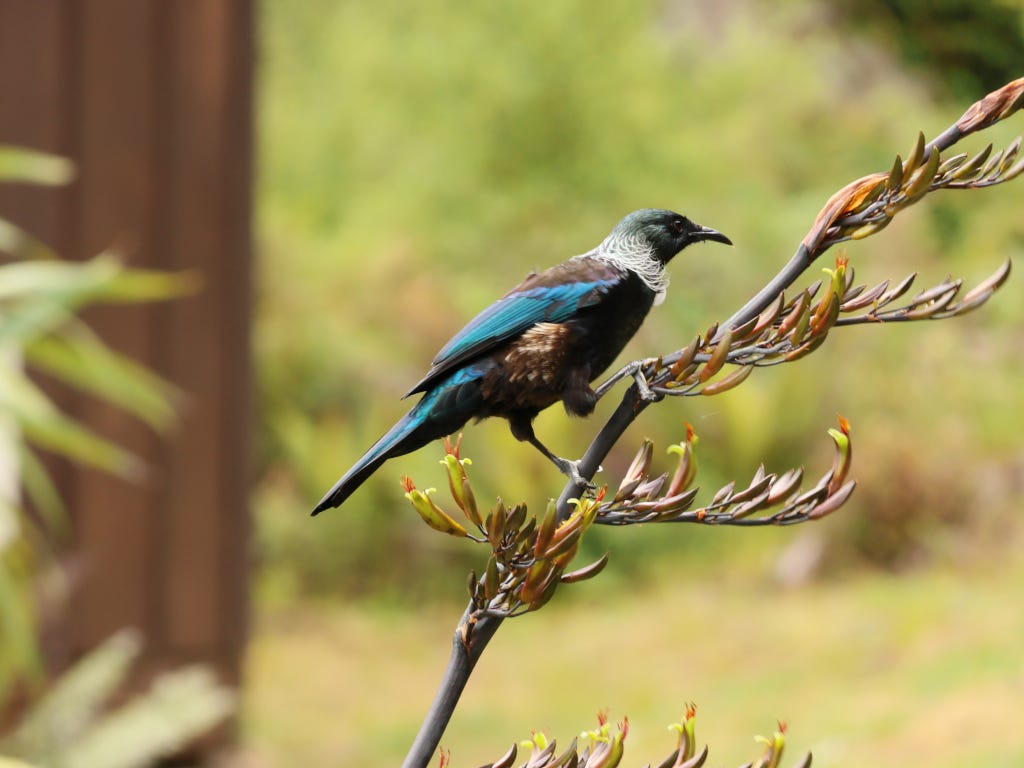
For quite a while, I have had in the back of my mind the idea of photographing one of these birds feeding on harakeke flowers, hoping to capture the contrast between the almost iridescent blue/green plumage and the deep orange of the flax flower.
Close to where I live is a wetland area that is a tranquil haven for local birdlife. There are walking tracks through the area, and many opportunities for wildlife photographers. Being a regular walker through this reserve, I have become somewhat familiar with the different light at different spots at different times of the day. I was also aware that the flax bushes were in flower and that it might be a good time to try and get the shot I wanted.
I headed down to the park with my tripod and my 800mm lens, firm in my mind that I would be able to get a picture of a tui on a flowering flax bush. As I walked through the reserve, I came across a spot where a flax flower stalk had fallen across the track, and a couple of tui were darting around in the trees above.
This was going to be the place and the time to get the shot I had been planning.
I positioned myself with the lowering sun behind me, giving a warmth to the scene, and set the focus on a cluster of flowers. There was space behind the flower, so the bokeh clearly defined the subject.
All I needed was the birds to feed, and bingo, I’d have my shot.
I sat patiently, far enough away from the scene so as not to scare the birds, but close enough to get a good image with the long lens. A couple of sparrows landed on the branch, and I recalibrated the focus point, ready for the tui. I switched the focus to manual to lock it in and watched the tui flitting around the area.
A tui flew close to the flower, but darted away at the last second. Be patient, I told myself, it was going to happen.
After 30 minutes, and with the light fading, I had not got my shot. The tui were still flying around and teasing me by swooping close to the flowers, but never landing to feed. The after-work exercisers were becoming more frequent, and one small dog, off the lead, yapped and ran into a group of wading birds, sending them flying and screeching in all directions. The owner of the dog, looked sheepishly apologetic as she walked past the tripod aimed at the branch, but by then the damage had been done.
One of the disadvantages of photographing in public parks is the public. Cyclists, joggers, dog walkers, and people enjoying the natural outdoors all seem to come along at just the wrong moment.
I packed up and returned home, disappointed that the scene I had been so confident of capturing still eluded me.
When I looked through the day’s images, I came across one of the test shots I had taken while setting up the focus point.
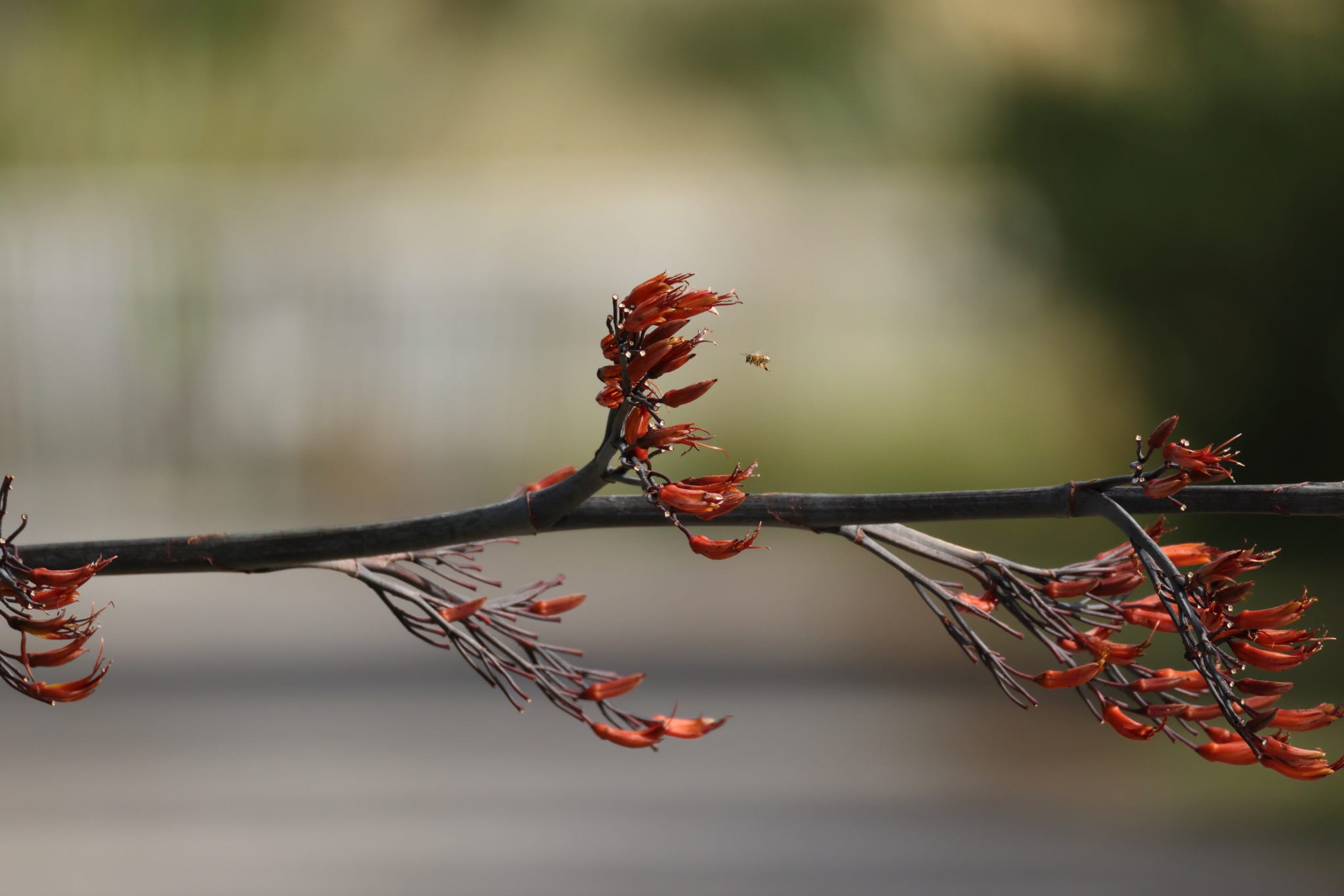
Although the bokeh effect was there, I could see indications of park walkers to the left of the flower, but also noticed a bee in the shot, which I hadn’t spotted when I took the photo.
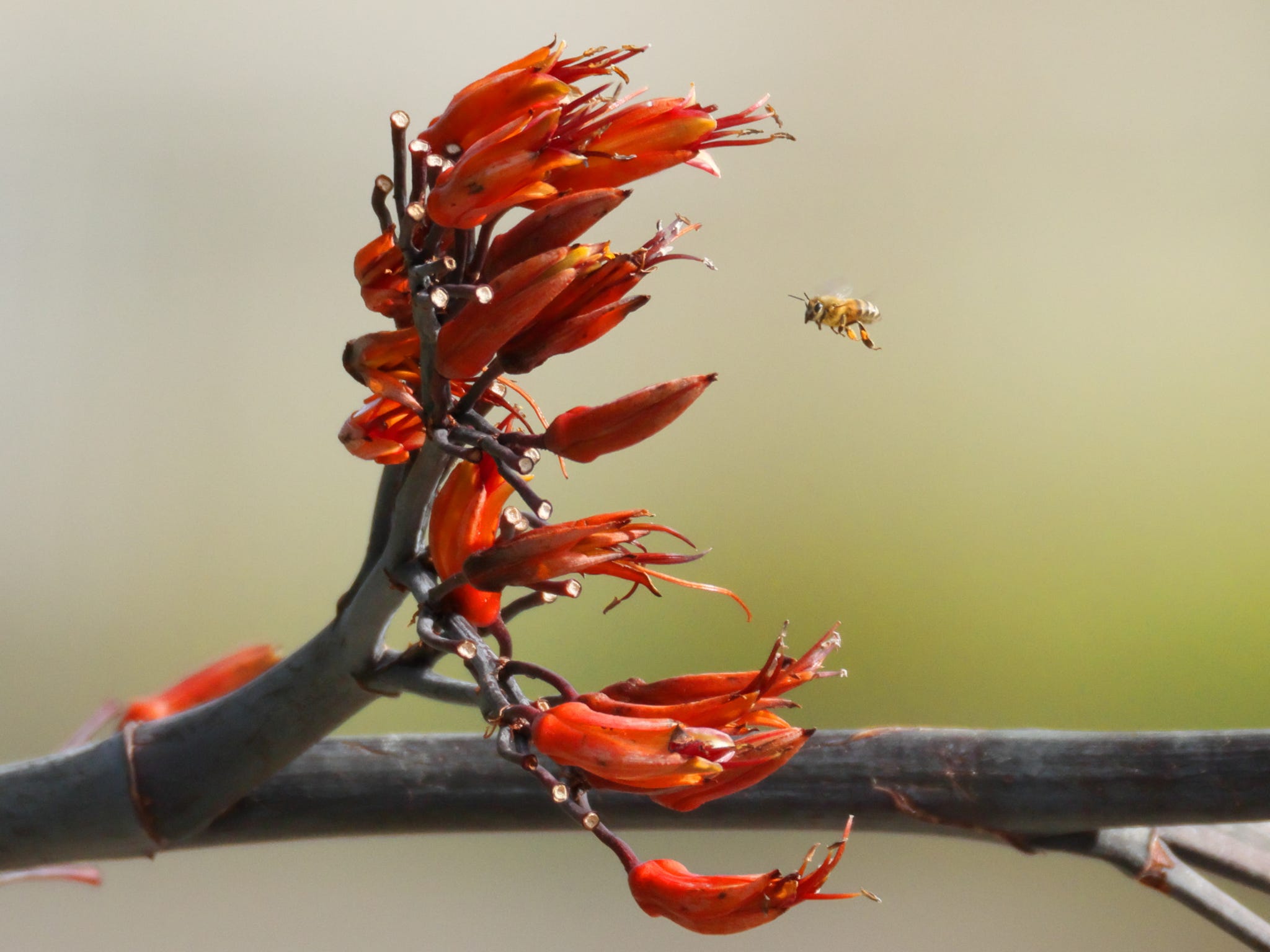
By cropping in and reframing the image, I might get a keeper from the day’s frustrating efforts.
I adjusted the contrast a little and lifted the shadows to give more detail in the branch. I was happy with the result. Not the tui feeding on flax flowers that I had envisioned, but a keeper nonetheless.
I guess the lesson was that no amount of planning can guarantee you the shot you have in your mind, especially when you are dealing with wildlife and people.
“The best camera to have is the one you have with you!” - Unknown
Wishing you good light, open eyes, and moments worth noticing.
Thank you for your time and take care…
Steve.
Next time: A frame within a frame
Links:
Website: ChuffedBadger Photography
Instagram: ChuffedBadger
Beginners Course: ChuffedBadger on Ko-fi